When Disaster Strikes: Your First Steps
A big storm rolls through, or maybe you just hear a sickening crack, and suddenly you've got a tree down. It's a stressful situation, no doubt about it. You're probably thinking, "What now?" The first thing you need to do is make sure everyone's safe. Check for downed power lines – if you see any, stay far away and call PG&E immediately. Don't touch anything. Once you know everyone's out of harm's way, then you can start thinking about the tree.
You'll want to call a professional tree service right away. Don't try to tackle a large, fallen tree yourself, especially if it's on your house or near power lines. That's how accidents happen. When you call, be ready to describe the situation clearly: what happened, where the tree is, if it's on any structures, and if there are any hazards like power lines. We'll usually ask for photos too, if it's safe for you to take them. This helps us understand the scope of the emergency before we even get there.
What Happens Next: The Emergency Timeline
Emergency tree removal isn't like scheduling a regular pruning job. It's urgent, and the timeline reflects that. Here's a general idea of what you can expect:
Immediate Response (Hours 0-24): Once you call us, we'll prioritize your emergency. We're talking about getting a crew out to you as fast as possible, often within a few hours, especially if there's a safety hazard or structural damage. Our first priority is to make the site safe. This might mean cutting away dangerous limbs, securing the area, or getting the tree off your roof. We might not remove the entire tree in this first visit, especially if it's late at night or the weather is still bad. The goal is stabilization and safety.
Assessment & Planning (Hours 12-48): After the immediate danger is handled, we'll do a more thorough assessment. We'll look at the tree's size, its position, any damage to your property, and what equipment we'll need. We'll also talk about what you want done with the wood – do you want it hauled away, cut into firewood, or left for you? This is when we'll give you a more detailed plan and a quote for the full removal.
Full Removal (Days 1-7, sometimes longer): This is when the heavy lifting happens. Depending on the size of the tree and the complexity of the job, this could take anywhere from a few hours to a couple of days. We'll use specialized equipment like cranes, chainsaws, and chippers. We take care to protect your property as much as possible during this process. For example, if a large oak came down in your backyard, especially in one of those older Milpitas neighborhoods with established trees, getting it out without damaging your fence or landscaping takes careful planning and execution.
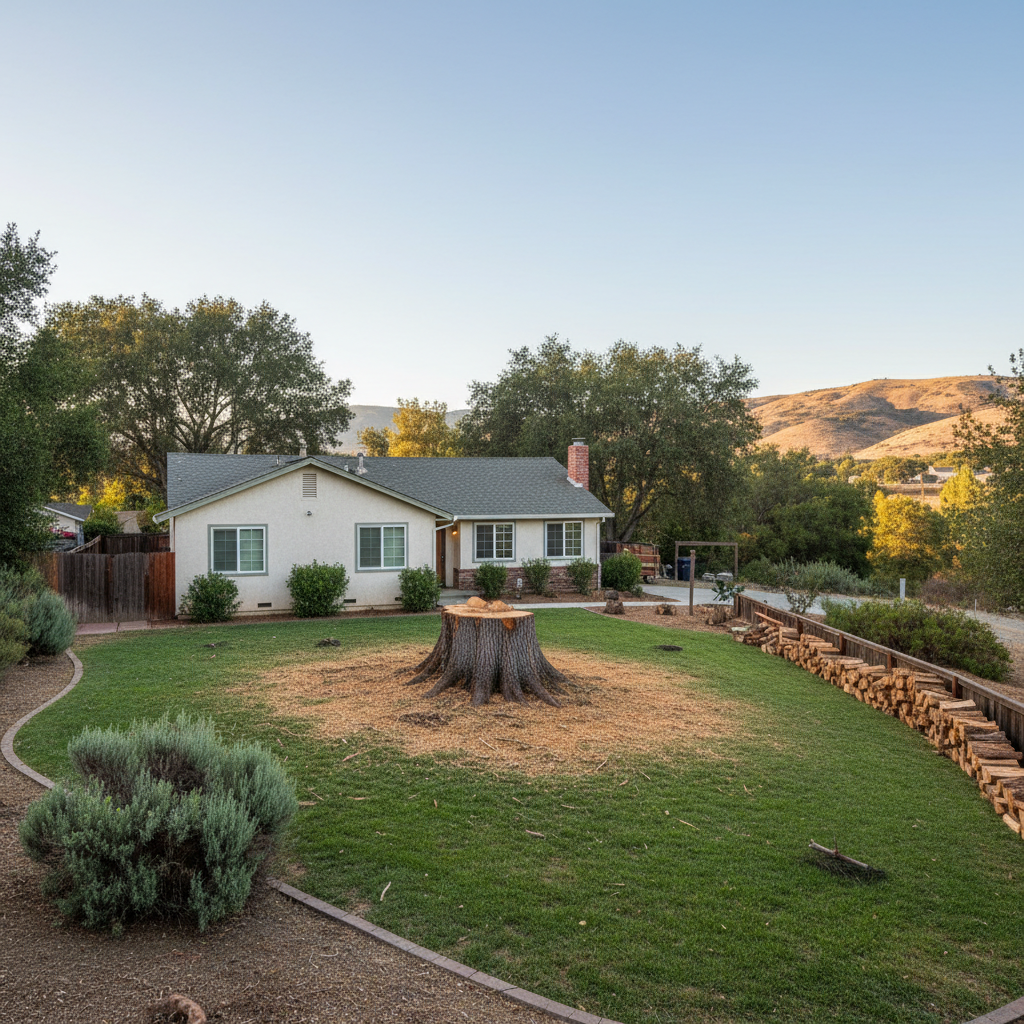
Cleanup & Follow-up (Days 2-10): Once the tree is gone, we'll clean up the debris. This includes chipping branches, raking leaves, and making sure the area is tidy. If you want stump grinding, that'll happen around this time too. We'll do a final walk-through with you to make sure you're happy with the work.
How to Prepare Your Property (If It's Safe)
While you're waiting for us to arrive, if it's safe to do so, here are a few things you can do:
Clear the Area: Move any patio furniture, garden decorations, kids' toys, or anything else that might be in the way of our crew and equipment. The less stuff we have to move, the faster and safer we can work.
Secure Pets and Kids: Make sure pets are indoors and kids know to stay well clear of the work zone. Tree removal is dangerous work, and we need a clear, distraction-free environment.
Take Photos: Snap some pictures of the damage before we start. These can be really helpful for your insurance claim later on. Get different angles, and make sure to capture any damage to your house, car, or other structures.
Locate Your Property Lines: If the tree is near a property line, knowing where it is can prevent any issues with neighbors. It's not always critical for an emergency, but good to know.
Crucial Questions Before You Sign Anything
Even in an emergency, you've got to protect yourself. Don't just go with the first company you call without asking a few key questions. Here's what I'd want to know if I were in your shoes:
Are you licensed and insured? This is non-negotiable. We're talking about heavy equipment and dangerous work. You need to know they have liability insurance and workers' compensation. If they don't, you could be on the hook if someone gets hurt or something goes wrong. Ask for proof, and don't just take their word for it.
What's included in the quote? Does it cover hauling away all debris? Stump removal or grinding? Repairing any minor damage to your lawn from equipment? Get it all in writing. You don't want surprises later.
What's your estimated timeline for completion? While emergencies are unpredictable, they should be able to give you a rough idea of when they expect to be finished with the full job, not just the initial stabilization.
Do you have references? Even in an emergency, a reputable company like Milpitas Tree Service should be able to provide references or show you examples of their work.
How do you handle potential property damage? What's their process if a piece of equipment dents your driveway or a falling branch breaks a window? Make sure you understand their policy.
What about permits? For emergency removals, permits are often waived or handled after the fact, but it's good to confirm if anything is needed from the city of Milpitas, especially if it's a very large or protected tree.
Dealing with a fallen tree is never fun, but with a clear plan and the right professionals, you can get through it. Stay safe, ask the right questions, and get your property back to normal as quickly as possible.